An Update on Our Syangja Projects

Leaving Lakeside Pokhara, the road winds up towards the Peace Pagoda that dominates the skyline over one side of the lake. The tourist trail stops here and we continue upwards through glorious countryside of steep foothills. It’s beautifully green, even at this pre-monsoon time of year. Around every corner there is a different beautiful view. It reminds me of the old Nepal, before concrete buildings sprung up in roadside villages. In this area there is none of that, just little traditional houses, neatly dressed children waiting for the school bus, and road workers maintaining the twisty road.

Our destination is Walling, one of the largest towns in the district. Here, modern concrete buildings dominate. The local paint salesman must have had a run on bright pink (almost fluorescent) paint. We collect our new recruit, Dhan Maya Gurung, who now supervises our eight project schools dotted around Walling. We need to use ‘dotted around’ loosely, as I will soon find out.

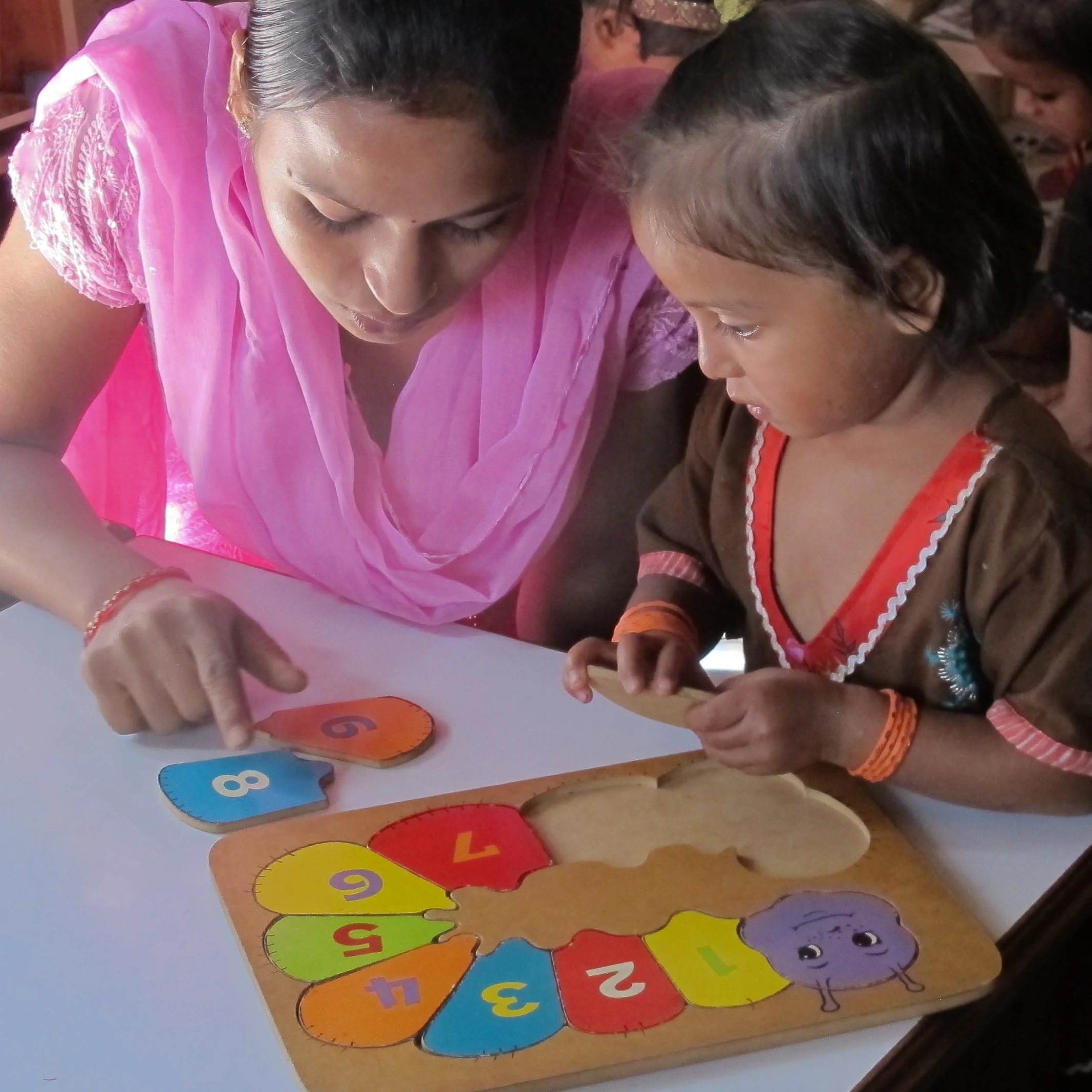
First, however, we pick our way through narrow lanes to a gate outside Sree Bhumre School. The first impression is of the newly decorated classrooms, which have been smartly painted with blue and cream. There is new carpet and low tables. The classrooms have been decorated with resources created by the teacher. It is fantastic to see this. We are delighted to enter a class where the children are colouring and working independently. This is a step in the right direction.

Room to Read.JPG

Having left our own vehicle in the town, we jump into an old Bolero pick-up for and head out of town, stuck for some time behind trucks waiting for a bulldozer to move a huge pile of rocks to widen the road. It is getting hotter as it approaches midday, and we still have four more schools to see this afternoon.

I quickly realise just why our car is unlikely to make it on this rough track, which apparently connects villages all the way up the hill. We bump around, leaving our seats and landing in fits of laughter (better to laugh than to scream!)

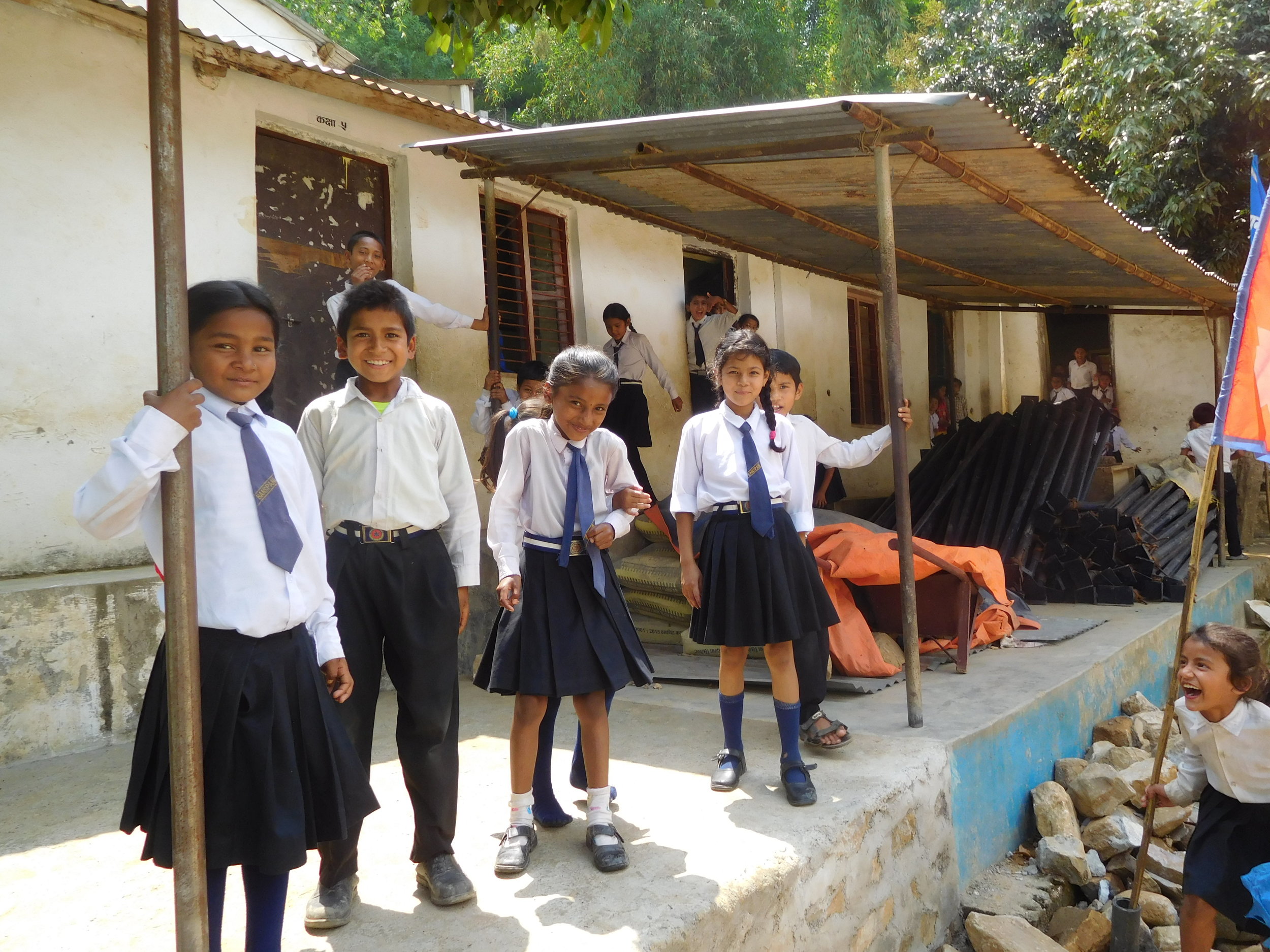
At Himali School, set in a stunning location next to a mountain stream, the teacher comes out to greet us. The early childhood teacher is a bright young woman who has really embraced what she has learnt at the First Steps training. The children obviously love her, and she is warm and enthusiastic. Children in another class are learning maths. The teacher is pointing to a chart and they repeat the number. Durga quickly produces number cubes, and immediately the kids are engaged in learning about numbers.
DSCN6908.JPG

In another room, the teacher shows us the English language exercise in the textbook that the year 2 children are struggling with. Teachers in Nepal are not trained in how to extend textbooks, and the poor children looked completely baffled. I pulled out a piece of scrap paper and a pen and wrote the words onto my improvised flash cards (a bird, a parrot), and gave them to the children. I was still convinced that this exercise was beyond them, but to my amazement a little boy quickly rearranged the cards to read “A parrot is a bird”. We tried another and another. The teacher started smiling as she realised that all she had to do was to come prepared to class with some simple activities to ease the children into exercises. Smiles all around.

The last school of the day was possibly in one of the most stunning locations we have seen. To get there, we had driven far above Walling on a twisty, bumpy track overlooking the whole area. Although it was almost the end of the school day, the children jumped for joy when they saw the box of resources that First Steps Himalaya provides to starter projects. This includes Nepali language story books, a set of cones for physical activities, number and letter cubes and paper, crayons and paints for art.

Yqazk-JG.jpeg

Our accommodation for the night is a homestay in a beautiful Gurung village, famed for its orange groves. Our host—a retired Gurkha soldier and his wife—show us to our room. However, the doorway to the first room they show us to is only about five feet high! Laughter abounds as they realise I will not be able to stand in the room. Quickly, another room is found around the side of the house with comfortable beds and quilts. It is cool up here, and after a delicious meal of dal bhat tarkari with home-grown vegetables, we retire to bed.

The next morning, we discover that we are not actually at the top of the hillside. The road becomes even rougher, and after bumping over rocks, not daring to look down, we reach a large school apparently in the middle of nowhere. Children seemed to spring up from all directions as the word gets out about our visit. The classrooms have been beautifully decorated and our newly trained teachers proudly demonstrated what they have learnt.

As the headmaster, Mr Kamal Gurung, told us:

It is so important to have the training that First Steps Himalaya provided. It was very effective and we can already see significant changes in our school. Thank you so much for your support.

Headmaster and teacher.JPG

"Everywhere We Have Been, The Message Is Clear"

Carmel Hutchinson, a First Steps Himalaya supporter from Hong Kong, recently spent a week in Nepal with Director Durga Aran visiting our new project schools in Nuwakot District.

In the journal extract below, she describes her experience visiting one of the more remote and in-need schools.

Srijansheel School, remote Nuwakot District.

Srijansheel is a tiny, two roomed building with no space around it and nothing but loads of rubble for the children to play amongst.

On our way to the school, we collected the lovely young ECD (Early Childhood Development) teacher, Bindhadhikari, to save her making the regular 45minute hike up the mountain. We had to park a fair way away as the road is more like a track really.

The school has 35 students altogether. It is fantastic that they are able to go to school at all in this remote, difficult to get to location. It’s a sure sign that the local kids from small farms in the area are committed enough to make the difficult trek to and from each day, possibly after doing a few hours work before school and resuming helping out at home afterwards. There’s no laying about staring at screens in this part of the world!

At only 20 years of age, Bindhadhikari is a dedicated, enthusiastic teacher with little training other than what she has learned in her 3 years on the job. She has very good English and although quietly spoken, she doesn’t seem as shy as most of the other women we have met. I think under the guidance of FSH, she will make an excellent educator, and with a few more years’ development, would potentially make a very good trainer.

This bright young teacher has 17 students in her tiny ECD room with not a single toy, book, puzzle or game to be seen. The outside area is mostly rubble. I have no idea how she manages to engage the children for 6 hours a day under these conditions. Again, hats off to these teachers working in such difficult conditions.

The setting for the school is ruggedly beautiful, as they all are, and clearly needed for the locals spread around the hills.

Everywhere we have been, the message is clear: training and facilities are desperately needed to help bring this incredibly beautiful country out of poverty.

Text and photos courtesy of Carmel Hutchinson.

A Broken School, But There Is Hope

The journal extract below comes from First Steps Himalaya supporter Carmel Hutchinson from Hong Kong, who previously shared her experiences of visiting one of our new project schools in Nuwakot District. Here, she talks about her shock at visiting a school that’s still struggling to recover from the 2015 earthquake.

Carmel spent a week in rural Nepal visiting First Steps Himalaya projects with Director, Durga Aran.

SUNDRADEVI SCHOOL – our 6th School for the day!

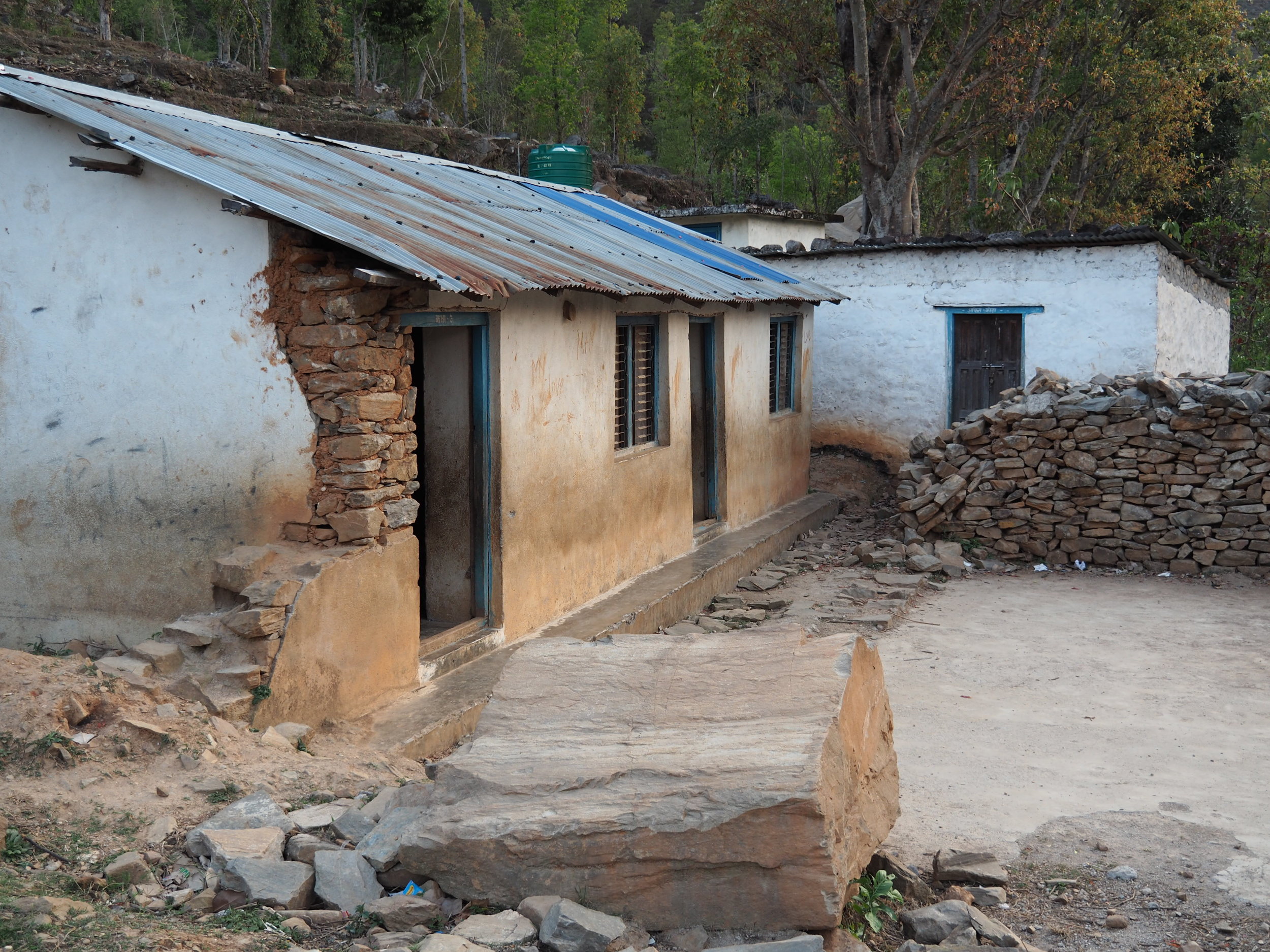
This school, and the one following, I found the most heartbreaking. They were almost completely devastated during the earthquake and there has been very little improvement since.

On the way to this remote, battered, crumbling school, we picked up the Headmaster. He was a quiet, well-dressed man who seemed fairly resigned. I later changed my assessment from resigned to a “bit broken”.

By comparison to others we’d seen, Sundradevi had been a sizeable school in its day, but the earthquake had all but destroyed it.

It is incomprehensible to think that almost four years after an event like that, these schools have yet to be visited by any central government representatives to assess the damage. 

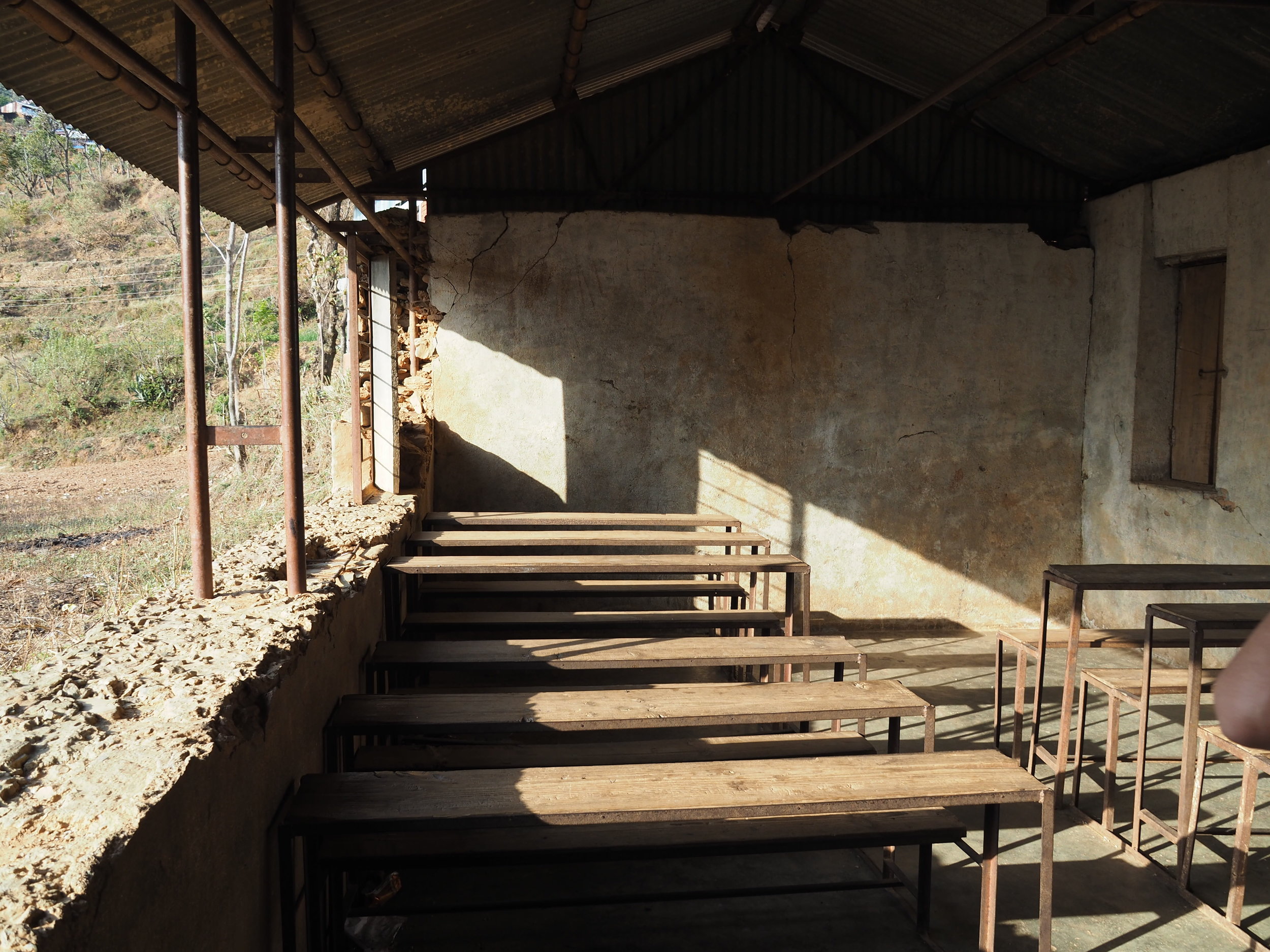
The children and teachers are working in classrooms with missing walls and no windows! I don’t know how they do it. Even on a warm, sunny day, the wind whistles up the mountain straight through the unprotected classrooms. I cannot even begin to imagine what it’s like in winter and if indeed the children even turn up for classes. I wouldn’t blame them if they didn’t.

No wonder the headmaster seemed like a broken man.

Construction on a new building has been slow going, and it will not be nearly adequate to accommodate all the students in the area. There are other buildings that from the outside look to be in a better state, but closer inspections through the barred windows reveal unstable roofs and walls.

In a western school, these buildings would have been demolished as soon as possible for safety purposes, but little or no funding makes that a low priority here.

Dal, his colleague, the headmaster and one of the other teachers from the school spoke at length about what they have endured and their hopes for the future. While Louise and I couldn’t understand most of it, we had the feeling as we left that the previously-resigned looking headmaster was standing taller and looking lighter. There was even a hint of a smile in one of the photos. I am filled with admiration for him and his staff, and for all teachers we have met this week. 

Text and photos courtesy of Carmel Hutchinson.

Notes From Nepal: Visiting A New School

In the journal extract below, First Steps Himalaya supporter Carmel Hutchinson from Hong Kong talks about her experience visiting one of our new project schools in Nuwakot District.

Carmel spent a week in rural Nepal visiting First Steps Himalaya projects with Director, Durga Aran.

Finally arrived at Nuwakot! The area surrounding this school is absolutely stunning. It was definitely worth the rugged journey to see this area.

The school we visited today, Ajingare Secondary School, had a pupil free day in preparation for exams. It is a pre K to Yr 10 school. I’m not sure why the primary kids weren’t in school, but sadly we could not see the kids and teachers in action. It’s interesting to see they shut the entire school and little kids miss out in exam time.

With local leader Dal behind the quest, this school wants to be taken on by FSH. It was heavily damaged in the earthquake with most of the school left either completely demolished or unstable. Apart from the appalling ablutions block and some shed like structures, it has since been rebuilt.  

00001158.jpg

There is a building at the entry to the school that was gutted in the earthquake and is still partially standing, with no plans for complete demolition. I’m not sure why, but I don’t think it belongs to the school, so it will probably stay like that, potential hazard that it is.

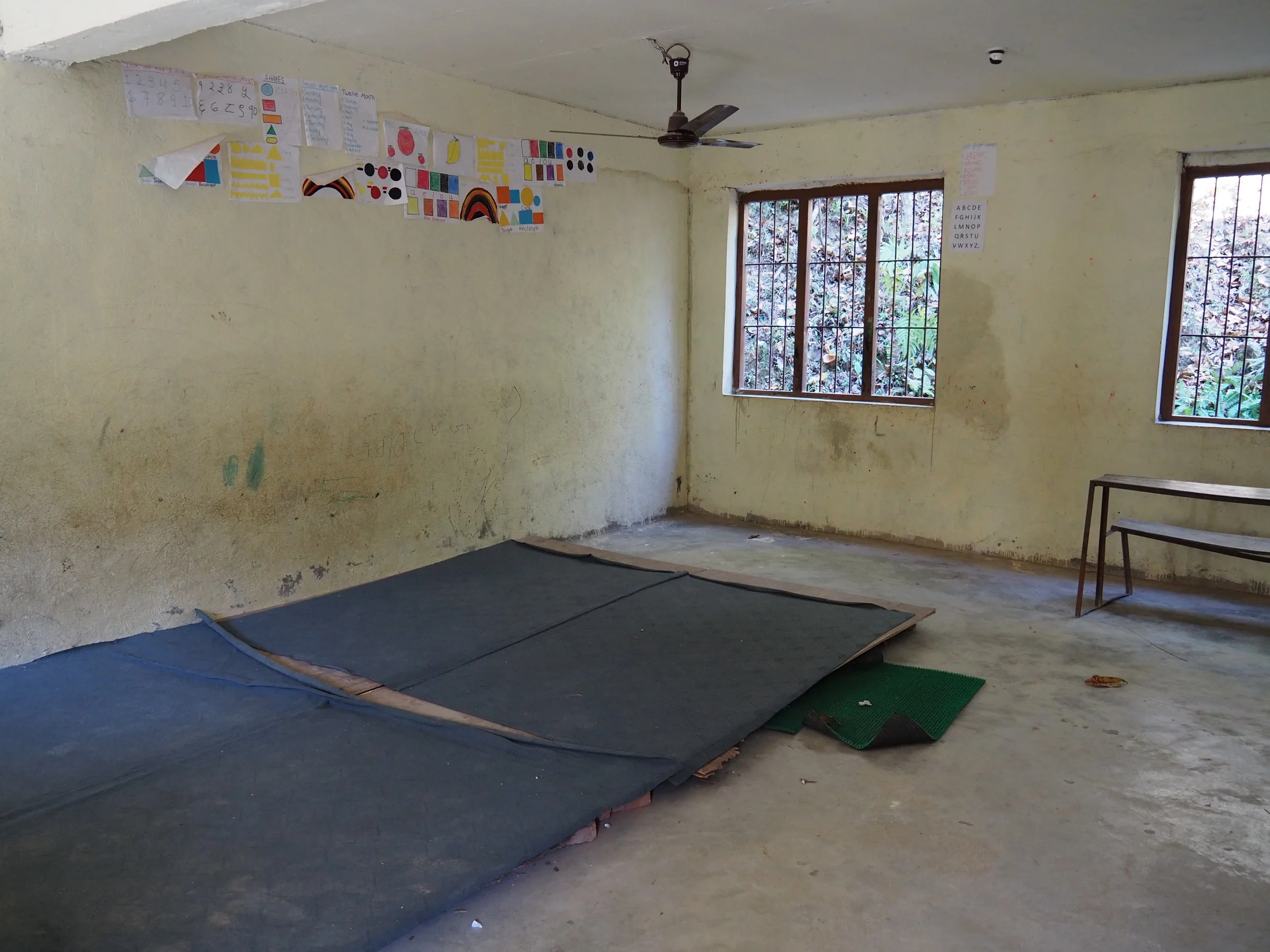
There are two buildings, both two-storey. There are quite nice and very practical. The Early Child Development room was a decent space but there was not a trace of anything in it that would appeal to children! It was basically an empty concrete room, half the floor slightly raised by a low platform, presumably to protect little bottoms from the cold concrete in winter.  

We were then taken to two other rooms, which have been earmarked to be the new ECD rooms. Again, just concrete rooms, but much lighter, so more welcoming spaces. Durga, Dal and the staff from that school spent a long time discussing how best to fit out the rooms.

The aim for FSH is to train the teachers how to create a vibrant, stimulating, engaging and welcome environment, with a good play based teaching programme to go with it. I am sure it will only be a few years until this school could be at a similar standard to some of the other schools under FSH’s umbrella.

It would be exciting for the kids and teachers to have a better learning environment in the future. I’d be interested to go back in a couple of years to compare.

FSH staff Yasoda, Ranjana, director Durga, and Dal.

FSH staff Yasoda, Ranjana, director Durga, and Dal.

Ranjana and Yasoda with two local teachers.

Ranjana and Yasoda with two local teachers.

Text and photos courtesy of Carmel Hutchinson.

The Situation In Rural Nepal

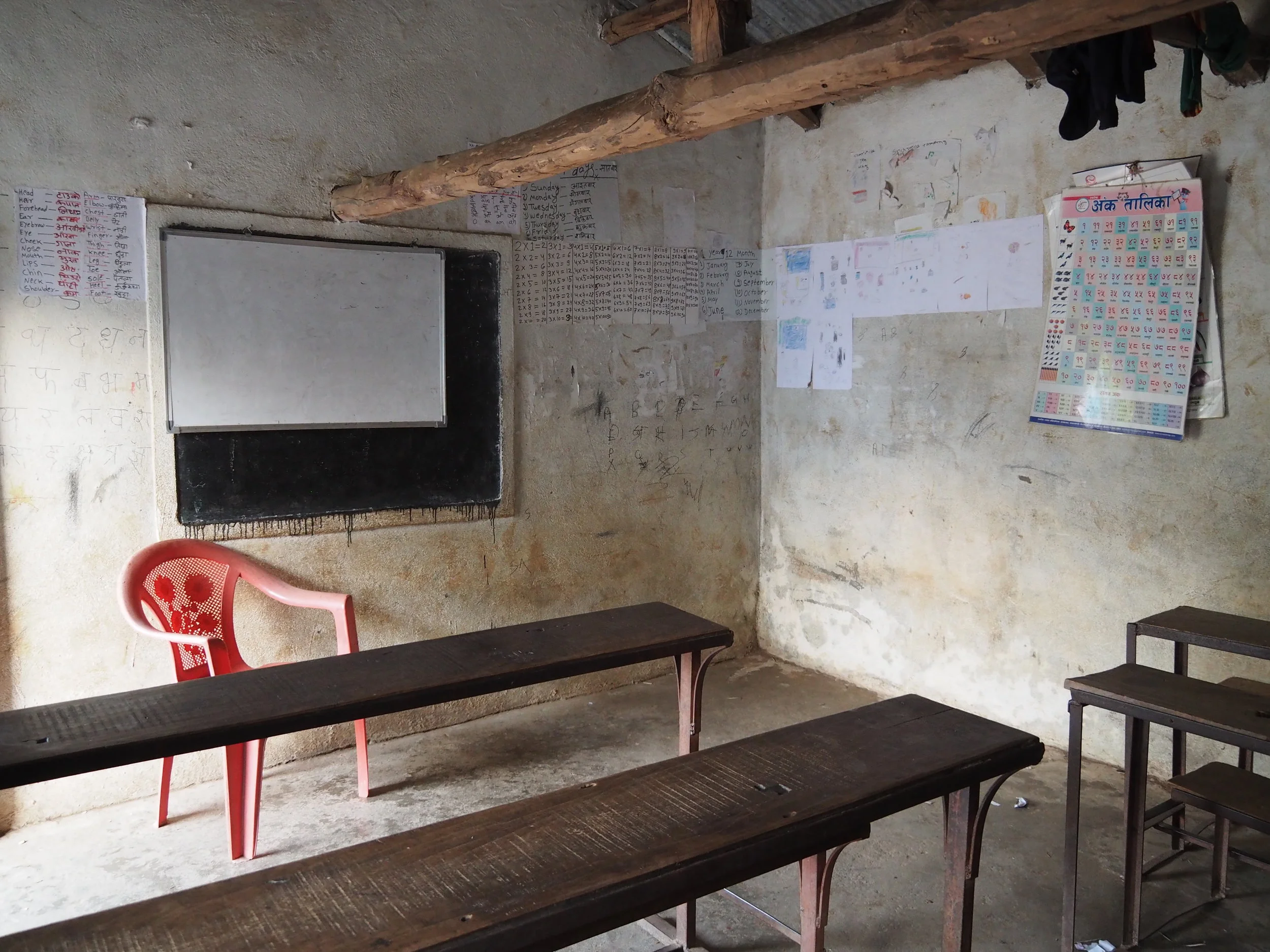
The situation for rural Nepali children is dire. All over Nepal, children are receiving sub-standard education in dilapidated government classrooms from untrained and unmotivated teachers. Academic results suffer, attendance levels are low, and graduation levels even lower.  


Families who can, will scrape together to send their children away to private schools, meaning even fewer children enrolled at the local government school, which leaves it at risk of being closed down altogether. This further marginalises the most impoverished rural families as their children’s access to education – even if it is sub-standard – is cut off.  

It has been documented worldwide that children who are deprived of education are lacking in critical thinking and decision-making skills, and are therefore more vulnerable to exploitation. They are more likely to become victims of child labour, trafficking, and exploitative overseas labour.  


In Nepal, many of these young people leave the village to find work in Kathmandu, India or the Gulf. Even there though their opportunities are few and they often find themselves trapped in exhausting conditions, not making the money they’d expected. Some don’t survive.  

Meanwhile back in the village, uneducated young women are further burdened with maintaining the farm while bringing up the next generation of rural children. Their husbands may return home once a year during Dasain festival, but sometimes even this isn’t manageable. Rural women have even fewer opportunities for advancement than the men, and lack the education or empowerment to raise themselves out of the cycle of poverty.  

Something urgently needs to change to break this cycle. Something big. Taking on the mission of improving education quality in a country is no small task, but it’s what First Steps Himalaya is working toward, one step at a time.  

We believe that quality education – available in rural communities where there is the most dire need – can combat the cycle of poverty and exploitation. Our vision is to create opportunities through learning, by providing access to quality early-years education.  

We work with teachers and in classrooms, setting high standards for child-friendly methods and materials. Our thorough teacher-training programme is followed up by ongoing monitoring and support, to ensure standards are maintained and children continue to receive the education they deserve.  

DSCN4405.JPG

From one small classroom in Sindhupalchok district ten years ago, we’ve already expanded to 75 classrooms across three districts in rural Nepal. Our methods are now being sought by schools and other aid organisations, who all recognise as we do the importance of quality education for improving the dire situation in Nepal’s rural communities.  

Quality education can empower the next generation of rural Nepali children to take their future into their own hands, to create their own opportunities, and to break free of the cycle of poverty.  

Learn more about our training methods, our projects, and our story. Or find out how you can help us to make a difference here.

Welcome to the First Steps Himalaya Blog

Welcome friends, supporters, and interested readers to the First Steps Himalaya blog.

Here we’ll be sharing with you our exciting new developments, updates on our progress, first hand experiences from volunteers and teachers, behind the scenes peeks at how we do what we do, and entertaining stories from our past.

We’ve been working in Nepal since 2008 to raise the standard of education in rural communities. Over the years we’ve developed an effective method to achieve this, which involves teacher training, classroom refurbishment and provision of resources. We also provide ongoing monitoring and support to our project schools to ensure long term success and a better education for the children.

All over Nepal, children are receiving sub-standard education in dilapidated classrooms from untrained & unmotivated teachers. We’ve seen what a lack of education can do in poor and rural communities. This results in a community with limited life skills, who are vulnerable to exploitation and very likely to be stuck in a cycle of poverty and limited opportunities.

We want to break that cycle and empower these children to change their future with the skills they can gain through a quality education.

From our small beginnings with just three children in one early childhood class, we’ve now grown to support 75 classrooms in 26 schools across 3 districts in Nepal, helping thousands of young Nepali children to reach their potential. And we’re still growing.

edited.jpg

We’re excited to share with you our progress, adventures, and past stories so you can see inside how we work and the challenges that face not only young Nepali students but also their teachers, and those who are trying to help.

We look forward to you joining us on this journey.

- The First Steps Himalaya Team